

PVC Pipes in Pakistan: What You Should Know – By Dura Flow
If you have ever built a house, worked on a farm, or managed a building in Pakistan, you have seen PVC pipes everywhere. They run behind walls, under roads, across fields, and inside factories. Over the last 20 years PVC has quietly become the most common pipe material in the country.
At Dura Flow we deal with this material every day. Contractors, plumbers, developers and homeowners all ask the same questions. Which pipe is right for my job. Will it last. Is it worth the money. This guide answers those questions in plain language.
What PVC Pipe Actually Is
PVC means Polyvinyl Chloride. It is a type of hard plastic. To make a pipe, manufacturers take PVC resin, add a few stabilizers and color, heat it, and push it through a die. The result is a smooth, rigid pipe that does not rust.
In Pakistan you will find PVC used for four main jobs. Cold water supply inside homes, drainage and sewer lines, agricultural water delivery, and electrical conduit to protect wiring. There is also a version called UPVC which is more rigid and handles slightly higher temperatures.
Why PVC Took Over in Pakistan
There are real reasons plumbers stopped using so much GI and copper pipe.
- First is corrosion. In many parts of Punjab, Sindh and Balochistan the water and soil are harsh on metal. A GI pipe can start leaking in 3 to 5 years. PVC does not rust. Once it is in the ground it stays the same.
- Second is cost. PVC costs less to buy and much less to install. You do not need a welder. Two people with a cutter, some solvent cement and basic tools can join a long run in a day. That saves labor and time.
- Third is weight. A 20 foot length of 3 inch PVC can be carried by hand. Try doing that with a metal pipe. On high rise sites in Karachi and Lahore this makes a big difference.
- Fourth is leaks. When you join PVC properly with solvent cement, the joint actually fuses together. If the work is done right, you get very few call backs for drips.
- And last, maintenance. Once a PVC line is buried or concealed, you basically forget about it. No painting, no wrapping, no rust treatment.
The Main Types You Will See in the Market
Not every PVC pipe is the same. Here is how the market breaks it down.
Pressure Pipes for Water Supply
These are used for cold water inside houses, apartments, schools and offices. You will see ratings like PN6, PN10 and PN16 printed on the pipe. That number tells you how much pressure the pipe can handle. For a normal house with a water pump, PN10 is the most common choice.
Drainage and Sewer Pipes
These are thicker, non pressure pipes with a socket at one end. Sizes start from 2 inch for bathroom waste and go up to 12 inch and larger for main sewer lines in housing societies. The smooth inside wall helps waste move and reduces blockages.
Agricultural Pipes
Farmers use PVC to carry water from tube wells to fields. It is also used for drip and sprinkler systems. Because it does not react with fertilizers, the pipe lasts longer than metal alternatives.
Electrical Conduit
Rigid PVC conduit protects wires inside slabs and walls. It is non conductive and slows fire spread, which is why electricians prefer it.
UPVC Pipes
UPVC is unplasticized PVC. It is stiffer and can handle a bit more heat. Many new buildings use UPVC for both hot and cold lines.
What to Check Before You Buy
The market has good pipes and bad pipes. The difference shows up after one or two summers. Here is what to look for.
- Ask if the pipe is made from virgin PVC resin. Some factories mix in recycled scrap to cut cost. That makes the pipe brittle.
- Check the wall thickness and pressure class. The PN rating should be clearly printed along the pipe, every meter.
- If the pipe will be outside, make sure it has UV protection. Without it, sun will make the pipe chalky and weak in a year.
- Look for proper testing. A serious manufacturer does pressure tests and drop tests in the factory.
- See if the company follows Pakistan Standards and has ISO procedures. That does not guarantee everything, but it shows they have a system.
At Dura Flow we run these checks on every batch. We keep records, we test, and we reject pipe that does not meet spec. That is the only way to avoid problems on site.
Where PVC Is Used Across Pakistan
Homes and Apartments
From a small house in Gujranwala to a tower in DHA Karachi, PVC handles water in and waste out. Plumbers like it because it is easy to cut and fit in tight spaces.
Commercial Buildings
Malls, hospitals and schools need big drainage and vent stacks. PVC is light, so it is easier to hang overhead. It also resists the chemicals found in commercial waste.
Farms
Tube wells are the lifeline of agriculture. PVC delivery lines are cheap to lay and easy to repair. If a section gets damaged, you just cut and replace that piece.
Industry
Factories use PVC for process water and for draining mild chemicals. Because it does not scale up inside, flow stays good for years.
City Projects
Municipalities are laying more PVC for sewerage and storm water. The long life means less digging on roads later.
Common Mistakes During Installation
Most PVC problems are not the pipe’s fault. They come from poor installation.
- Do not rush the joint. Clean the pipe, apply cement to both socket and pipe, push and give it a quarter turn. Hold for 10 seconds.
- Give it time to cure. In hot weather 30 to 45 minutes is usually enough. In cold weather wait 2 hours before testing.
- Support overhead lines. If you hang a long run with no clamps, it will sag and joints can stress.
- Bury underground pipe on a sand bed. Sharp stones can create pressure points and cause cracks later.
- Use the right cement. The cheap thinner in a bottle is not solvent cement. Buy the product made for PVC.
Do these basics and the system will run for decades.
Why Dura Flow
Dura Flow started because we got tired of seeing projects fail due to poor pipe. Our goal is simple. Give the market a pipe that matches what is written on it.
We focus on three things.
- Consistency. Every pipe that leaves our plant is the same thickness, same diameter, same pressure rating. That matters when you have 200 workers on site.
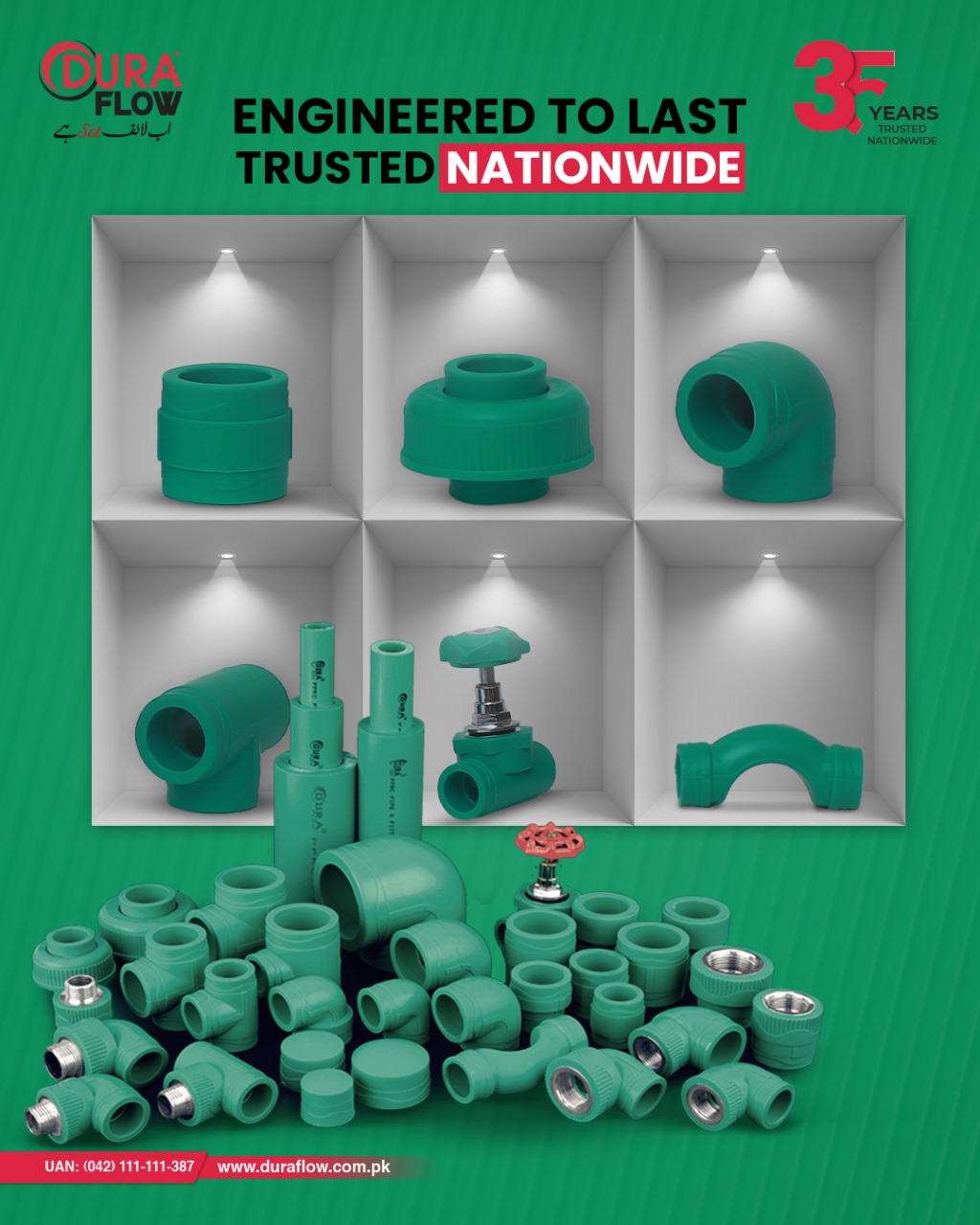
- Range. We keep the sizes that people actually use. From ½ inch for a house connection to large diameters for society sewer lines. We also stock elbows, tees, sockets and traps so you can buy a full system in one place.
- Support. If a contractor is unsure about depth of burial or pressure testing, we send someone to explain. Better to answer a question before concrete is poured.
We also keep stock in Lahore, Karachi, Islamabad, Faisalabad, Multan and Peshawar. That way material arrives when the schedule needs it, not two weeks later.
Price and Value
People always ask about price. Yes, there are cheaper pipes in the market. But think about total cost. If a cheap pipe leaks after 2 years, you pay for breaking tiles, repainting, and new material. A good PVC pipe costs a bit more up front and then you do not think about it again.
Dura Flow tries to keep prices fair by running efficient production and buying raw material in bulk. We do not cut corners on resin or testing to win a job.
Looking Ahead
Pakistan is building. New housing, new roads, new farms. All of that needs water in and waste out. PVC will stay at the center of that.
There is also more focus on quality now. Builders are learning that saving 5 percent on pipe can cost 50 percent later in repairs. Clients are asking for branded pipe with clear markings. That is a good shift.
We also see more use of PVC in efficient irrigation. As water gets scarcer, farmers need systems that do not leak. PVC fits that need.
Final Words
If you are planning a project, here is the simple way to choose.
- Decide what the pipe will do. Water supply, drainage, or agriculture. Pick the right type and pressure class.
- Buy from a company that tests its product and stands behind it.
- Hire a plumber who knows how to join PVC properly.
Do that and you will not have problems.
Dura Flow makes PVC pipes for Pakistani conditions. Hot summers, hard water, rough handling on site. We build the pipe to survive that and we back it with service.